
Water matrices
One platform,
every water.
The same 55 mm disc and the same analysis engine apply to every matrix: from catchment to discharge, from the tap to the shoreline. The matrix sets the regulatory context and thresholds; the architecture does not change.
The principle
One matrix, one context: a single technology.
Where others stack single-use probes, Drop! deploys a common platform: you activate the useful capability (quality, hydraulics, metering) and load the matrix’s regulatory reference. Measurement becomes comparable across domains, and the data stays yours.

Drinking
metals · nitrates · chlorine
Drinking
Drinking water
From catchment to tap, compliance must hold continuously, not only on sampling day.
What the sensor observes
- Metals: lead, copper, arsenic (mercury, cadmium under watch)
- Nitrates & free chlorine
- Conductivity, ORP, dissolved oxygen, turbidity
- Organic matter & signature anomaly (directs pesticide analysis)
Context
French Public Health Code · EU Directive 2020/2184. The sensor does not measure PFAS online: VizO tracks their compliance from sanitary control and laboratory bulletins, and the Tap module abates them at the point of use.
The Drop! edge
Continuous sentinel vigilance that directs accredited analysis to the right place and time, without ever replacing it.

Surface
Mann-Kendall trend
Surface
Surface water & resource
The quality of the resource drives everything downstream. Watching it continuously means anticipating rather than reacting.
What we watch
- Upstream pressure & diffuse discharges
- Dissolved oxygen & organic matter
- Nutrients (nitrogen, phosphorus)
- Seasonality, low-water & turbidity
Context
Water Framework Directive (2000/60/EC): monitoring of water bodies, rivers and raw-water intakes.
The Drop! edge
Non-parametric trends (Mann-Kendall, Theil-Sen) and early warning on the resource, ahead of treatment.
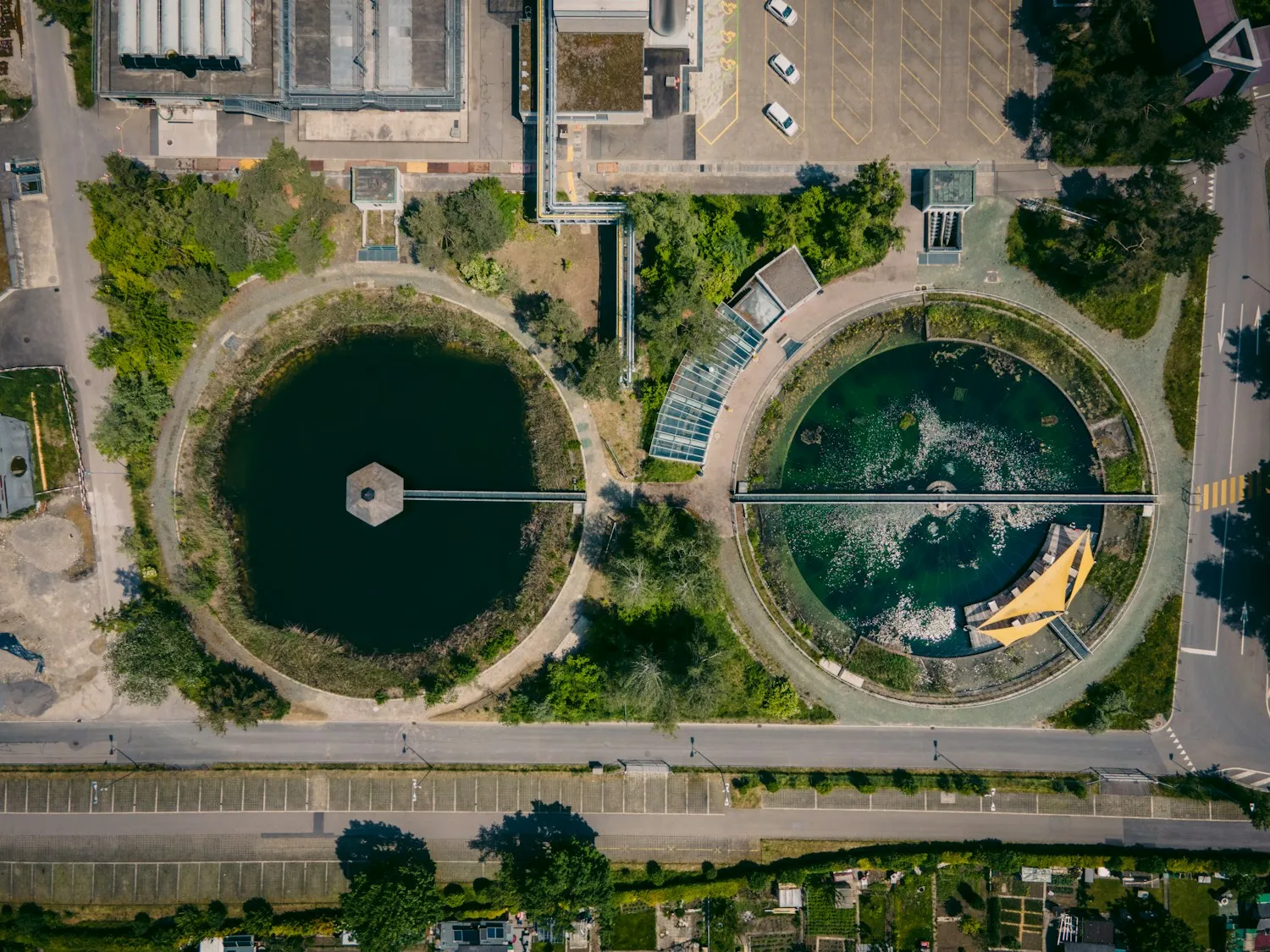
Wastewater
inlet → outlet
Wastewater
Treatment & discharge
Measuring inlet and outlet means steering treatment yield and securing discharge compliance.
What we watch
- Incoming loads (BOD₅, COD, TSS)
- Nitrogen & phosphorus
- Inlet → outlet treatment yield
- Overloads, by-pass & discharge compliance
Context
Regulatory self-monitoring of treatment plants and compliance of the discharge to the receiving environment.
The Drop! edge
A continuous inlet/outlet view rather than point-in-time balances, with self-monitoring reporting prepared.

Shellfish
class A · B · C
Shellfish
Shellfish & coastal waters
In production areas, a contamination episode unfolds in hours. Continuous monitoring protects the classification.
What we watch
- Microbiology (E. coli, faecal indicators)
- Salinity, temperature & turbidity
- Phytoplankton & blooms
- Weather & catchment context
Context
Health classification of areas (A / B / C) and REMI / REPHY-type monitoring: quality drives marketability.
The Drop! edge
Early warning on episodes to close or reopen at the right moment, limiting the economic impact.

Pools
continuous monitoring
Pools
Bathing & public venues
Public and collective pools: bather safety demands a continuity that manual readings cannot provide.
What we watch
- Disinfectant (free & total chlorine)
- By-products: chloramines, THMs
- pH & water balance
- Attendance & pool load
Context
Public Health Code (bathing waters) and the regulatory framework for pool water.
The Drop! edge
24/7 monitoring of disinfectant and by-products: bather comfort and compliance, without manual rounds.
Beyond the five
The list grows, the complexity does not.
Industrial processes, cooling waters, irrigation networks: wherever a water must be measured continuously and judged against a reference, the platform applies. Let’s talk about your matrix.
Water matrices
The technology stays the same. Your context doesn’t.
Quality, hydraulics or metering: activate the capability your matrix needs, on the same platform.